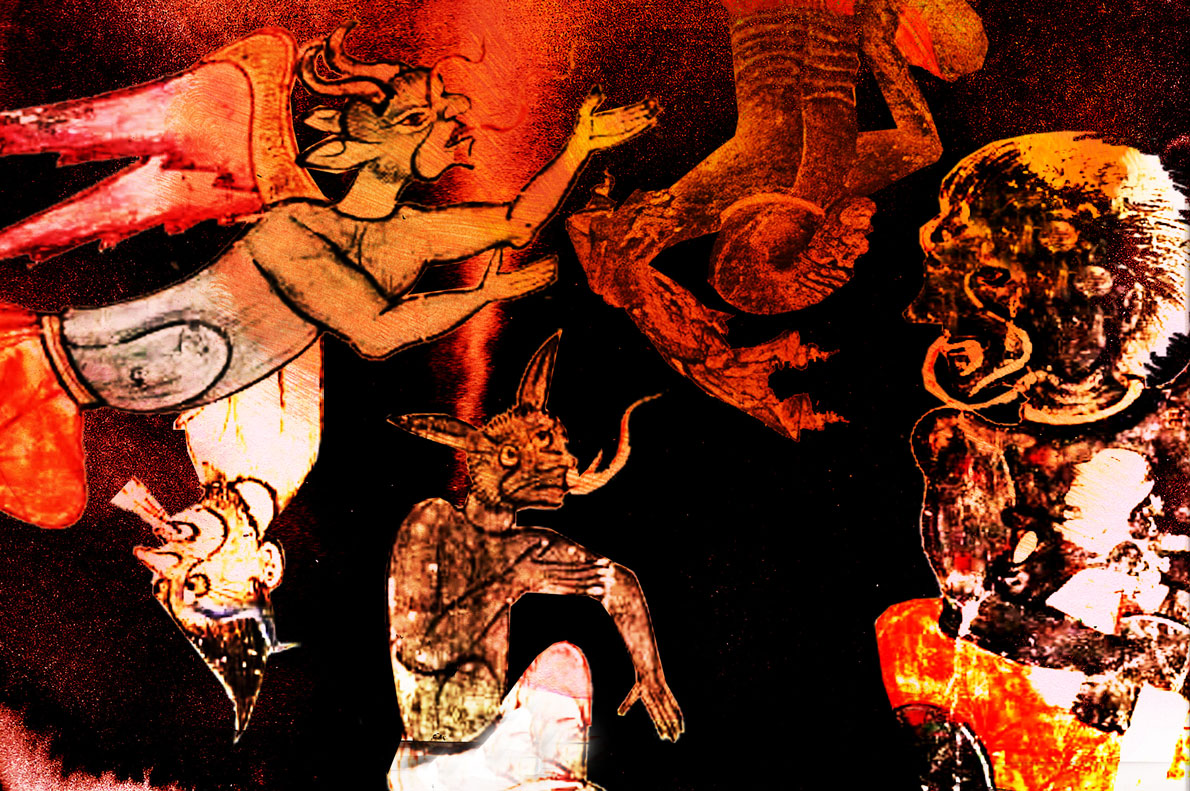
A Global Compendium of Evil Spirits: Demons and Djinn

oneli.org – Throughout history, cultures around the world have woven tales of malevolent entities that roam the earth, causing chaos and misfortune. These beings, often referred to as demons or djinn, have been a staple in folklore, mythology, and religious texts. This article delves into the global compendium of these evil spirits, exploring their origins, characteristics, and the various ways they have been depicted across different cultures.

The Origins of Demons and Djinn

Demons and djinn are ancient concepts, with their roots stretching back to the earliest recorded human civilizations. The term “demon” originates from the Greek word “daimon,” which could refer to a spirit of any kind, not necessarily evil. However, over time, the connotation shifted to that of a malevolent entity. In contrast, “djinn” or “jinn” comes from Islamic mythology, where they are believed to be made of smokeless fire and possess free will, much like humans.

Demons in Western Tradition

In Western tradition, demons are often depicted as fallen angels, cast out of heaven for rebelling against God. The Christian Bible, particularly the New Testament, is replete with stories of Jesus casting out demons from the possessed. These entities are seen as agents of Satan, seeking to corrupt and lead humanity astray.

Djinn in Islamic Culture

Islamic lore describes djinn as powerful beings capable of interacting with the human world. They can be either good or evil, with the evil djinn causing mischief and harm to humans. The Quran mentions djinn and advises believers to seek refuge in God from their mischief. Popular culture has often depicted djinn as genies, granting wishes, but this is a simplified and often misunderstood interpretation of their complex nature.

Demons and Djinn in Other Cultures

Beyond the Abrahamic traditions, demons and djinn-like entities are found in virtually every culture. In Japan, for example, the oni are demons or trolls that are often depicted with horns and carrying iron clubs. In Hindu mythology, asuras are powerful beings with demonic traits, often at odds with the devas, or gods.

The Characteristics of Demons and Djinn

Despite their diverse origins, demons and djinn share some common characteristics. They are often invisible to the human eye, capable of possessing individuals, and can be summoned or banished through various rituals. Their motivations vary, from causing harm for the sake of it to seeking revenge or fulfilling their own desires.

The Influence of Demons and Djinn on Society

The belief in demons and djinn has had a profound impact on societies, influencing everything from religious practices to art and literature. Exorcisms and protective amulets are just a few examples of how people have sought to protect themselves from these malevolent spirits.

Conclusion

Demons and djinn represent the darker aspects of human belief systems, embodying our fears and the unknown. While they may be considered mere myths by some, for others, they are a very real part of the spiritual world. Regardless of one’s belief, these entities continue to captivate the human imagination, serving as a reminder of the complex relationship between the seen and the unseen.

Global Motorcycle Journeys: Two Wheels, One World

In the heart of every adventurer lies the desire to explore the unknown, to feel the wind against their face as they traverse the globe, and to connect with cultures far removed from their own. For many, the motorcycle is the perfect vehicle for such escapades, offering a sense of freedom and a direct connection to the environment that no other form of travel can match. “Two Wheels, One World” is not just a phrase; it’s a philosophy embraced by those who choose to explore the world on two wheels, embarking on global motorcycle journeys that are as diverse as the landscapes they cross.

The allure of motorcycle travel is undeniable. It’s about the journey, not just the destination. Riders are not merely spectators; they are active participants in the adventure, feeling every change in the road, every drop of rain, and every ray of sunshine. The motorcycle strips away the barriers between traveler and terrain, allowing for a more intimate experience of the world.

Global motorcycle journeys can take many forms. Some riders prefer the solitude of solo travel, while others find camaraderie in group rides. Routes can be well-trodden paths or off-the-beaten-track adventures that require a spirit of exploration and a willingness to face the unexpected. From the rugged trails of the Himalayas to the sun-soaked highways of California, from the lush landscapes of Southeast Asia to the icy expanses of the Arctic Circle, the world is a vast playground for the intrepid motorcyclist.

One of the most iconic motorcycle journeys is the Pan-American Highway, stretching from Alaska to Argentina. This epic ride offers a slice of every imaginable landscape, from dense rainforests to arid deserts, from bustling cities to remote villages. It’s a journey of contrasts, where riders must navigate not only the physical challenges of the road but also the cultural and linguistic diversity of the Americas.

In Asia, the Karakoram Highway beckons with its breathtaking mountain scenery. Connecting Pakistan and China, this road is a testament to human resilience and engineering skill. Riders must be prepared for high-altitude conditions and the unpredictable nature of the weather, but those who make the journey are rewarded with some of the most stunning vistas on the planet.

Europe offers a different kind of motorcycle adventure, with a patchwork of countries each offering its own unique flavor. The Romantic Road in Germany, the Amalfi Coast in Italy, and the Scottish Highlands are just a few of the destinations that attract riders from around the world. The relatively short distances between countries mean that riders can experience a variety of cultures and landscapes in a single trip.

Africa is a continent of extremes, and motorcycle travel here can be both exhilarating and challenging. The Cape to Cairo route, which runs from South Africa to Egypt, is a journey through the heart of Africa, offering encounters with wildlife, diverse cultures, and some of the most spectacular scenery on the planet. It’s a trip that requires preparation, resilience, and a sense of adventure.

For those who prefer the solitude of the sea to the bustle of the land, the Isle of Man TT course offers a unique motorcycle experience. This 37.73-mile road circuit is used primarily for the Isle of Man TT races, but it’s also a pilgrimage site for motorcycle enthusiasts who want to ride the same challenging course as their racing heroes.

Global motorcycle journeys are not just about the physical journey; they’re also about personal growth and the connections made along the way. Riders often find themselves welcomed into communities, sharing meals and stories with locals who are curious about the travelers on two wheels. These interactions can lead to lifelong friendships and a deeper understanding of the world and its people.

The spirit of “Two Wheels, One World” is about more than just travel; it’s about embracing the unknown, pushing personal boundaries, and celebrating the diversity of our planet. Whether you’re a seasoned rider or a novice, there’s a motorcycle journey out there that can change your perspective and enrich your life. So, start your engines, and let the open road lead you to new horizons. The world is waiting to be explored, one twisty turn at a time.