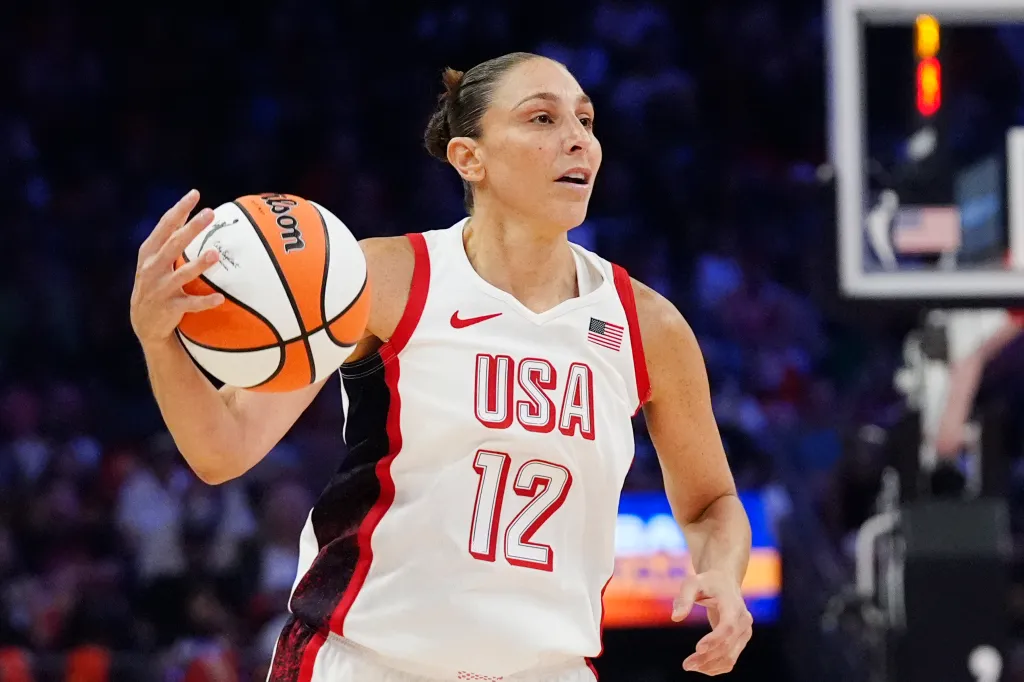
Legend in Women’s Basketball: Diana Taurasi

oneli.org – Diana Taurasi, often hailed as one of the greatest women’s basketball players of all time, has left an indelible mark on the sport through her remarkable skills, competitive spirit, and numerous accolades. Born on June 11, 1982, in Chino, California, Taurasi’s journey to basketball stardom began early, showcasing her talent and determination from a young age.

Early Career and College Success

Taurasi’s basketball prowess was evident during her high school years at Don Antonio Lugo High School in Chino, where she was named the Naismith High School Player of the Year in 2000. Her exceptional talent led her to the University of Connecticut (UConn), where she became a key player for the Huskies. During her college career, Taurasi led UConn to three consecutive NCAA championships from 2000 to 2003, a feat that solidified her status as one of the most successful college basketball players in history.

Professional Career and International Success

After completing her college career, Taurasi was selected first overall by the Phoenix Mercury in the 2004 WNBA Draft. Her transition to the professional ranks was seamless, and she quickly became one of the league’s top players. Throughout her WNBA career, Taurasi has led the Mercury to three WNBA championships (2007, 2009, and 2014), earning Finals MVP honors in 2009. Her scoring ability, basketball IQ, and leadership on the court have made her a perennial All-Star and one of the most respected players in the league.

In addition to her success in the WNBA, Taurasi has also made a significant impact on the international stage. She has been a key member of the United States women’s national basketball team, helping the team win multiple gold medals in the Olympics and FIBA World Cup. Taurasi’s ability to perform under pressure and her clutch performances have been instrumental in the team’s success.

Legacy and Impact

Diana Taurasi’s legacy extends beyond her impressive list of achievements. She has been a trailblazer for women’s basketball, inspiring future generations with her dedication, work ethic, and competitive spirit. Taurasi’s impact on the game is not just measured by her statistics and accolades but also by the way she has elevated the sport and paved the way for future stars.

As Taurasi continues to compete at the highest level, her influence on basketball remains undiminished. She has not only set records and won championships but has also challenged perceptions and expanded the possibilities for women’s basketball. Diana Taurasi’s journey from a talented high school player to a basketball legend is a testament to her talent, hard work, and unwavering commitment to the game.

In conclusion, Diana Taurasi’s contributions to women’s basketball are immeasurable. Her career is a shining example of excellence, leadership, and perseverance. As she continues to inspire and captivate audiences around the world, Taurasi’s legacy as one of the greatest basketball players of all time is secure.

Women’s Tennis Legends: Champions of the Court

oneli.org – Tennis, a sport that has captivated audiences worldwide for over a century, has been graced by an array of remarkable women who have left an indelible mark on the game. These champions of the court have not only showcased unparalleled skill and determination but have also broken barriers, inspired generations, and redefined what it means to be a female athlete. From the grass courts of Wimbledon to the hard courts of the US Open, these legends have etched their names into the annals of tennis history.

Billie Jean King: The Trailblazer

Billie Jean King’s legacy extends far beyond her 39 Grand Slam titles. A pioneer for gender equality in sports, King’s victory in the “Battle of the Sexes” match against Bobby Riggs in 1973 became a symbol of women’s empowerment. Her advocacy led to the formation of the Women’s Tennis Association (WTA) and paved the way for greater recognition and prize money for female players.

Serena Williams: The Greatest of All Time (GOAT)

With 23 Grand Slam singles titles, Serena Williams is often cited as the greatest women’s tennis player in the Open Era. Williams’ powerful serve, aggressive playing style, and unmatched athleticism have dominated the sport for over two decades. Beyond her on-court achievements, Serena has been a vocal advocate for equality and has used her platform to address issues of race and gender.

Martina Navratilova: The Record Holder

Martina Navratilova’s record of 59 Grand Slam titles (singles, doubles, and mixed doubles) remains unmatched. Known for her incredible fitness, versatility, and sportsmanship, Navratilova’s career spanned three decades, during which she won a record nine Wimbledon singles titles. Her defection from Czechoslovakia to the United States in 1975 also made her a symbol of freedom during the Cold War.

Steffi Graf: The Golden Slam

Steffi Graf’s achievement of winning all four Grand Slam titles and the Olympic gold medal in a single calendar year (1988) is known as the “Golden Slam.” With 22 major singles titles, Graf’s powerful forehand and consistent baseline play made her one of the most dominant players of her era. Her rivalry with Monica Seles in the early 1990s is considered one of the greatest in tennis history.

Chris Evert: The Clay Court Queen

Chris Evert’s reign on the clay courts of Roland Garros is legendary. With a record seven French Open titles, Evert’s consistency, and mastery of the clay surface set a standard for future generations. Her rivalry with Martina Navratilova is one of the most celebrated in sports, with their matches showcasing contrasting playing styles that captivated fans worldwide.

Venus Williams: The Innovator

Venus Williams’ impact on the sport extends beyond her seven Grand Slam singles titles. Known for her powerful serve and aggressive net play, Venus has been a trailblazer in fashion, designing her own outfits and pushing the boundaries of tennis attire. Alongside her sister Serena, Venus has been a force for change in the sport, advocating for equal prize money and opportunities for women.

Margaret Court: The Record Setter

Margaret Court holds the record for the most Grand Slam titles in tennis history, with 64 across singles, doubles, and mixed doubles. Her 24 major singles titles were a record that stood for decades. Court’s achievements span the amateur and professional eras, showcasing her dominance and skill in an era when women’s tennis was still finding its footing.

These women’s tennis legends have not only achieved unparalleled success on the court but have also been instrumental in shaping the landscape of women’s sports. Their contributions to tennis and society at large continue to inspire future generations of athletes to strive for greatness, both on and off the court. As the sport evolves, the legacy of these champions of the court will forever be celebrated as a testament to the power of perseverance, talent, and the unyielding spirit of women in sports.

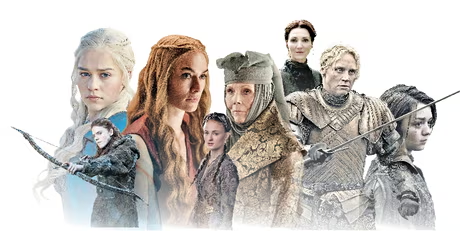
Women Who Wield Power: Venomous Vixens

oneli.org – In the annals of history and the realms of fiction, there exists a category of women often labeled as “Venomous Vixens.” These are women who, through their intelligence, cunning, and sometimes ruthlessness, have wielded power in ways that have left indelible marks on the world. They are queens, warriors, politicians, and business moguls who have navigated the often turbulent waters of power with a finesse and ferocity that has both inspired and intimidated. This article delves into the lives of some of these remarkable women, exploring the complexities of their characters and the legacies they have left behind.

Cleopatra VII: The Last Pharaoh of Egypt

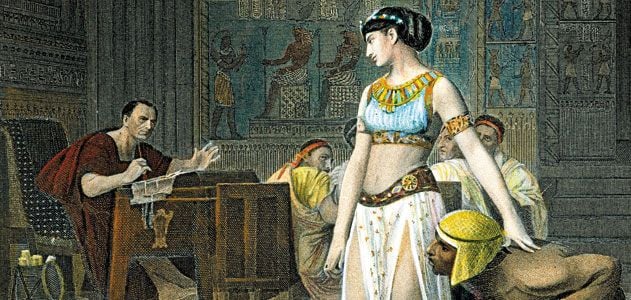
Rehabilitating Cleopatra | Smithsonian

Cleopatra is perhaps one of the most famous examples of a venomous vixen. As the last active ruler of the Ptolemaic Kingdom of Egypt, she was known for her political acumen, her relationships with Roman leaders Julius Caesar and Mark Antony, and her eventual suicide to avoid capture by Octavian. Cleopatra’s ability to navigate the treacherous waters of Roman politics and maintain her sovereignty over Egypt, albeit briefly, showcases her formidable intelligence and strategic prowess.

Boudica: The Warrior Queen of the Iceni

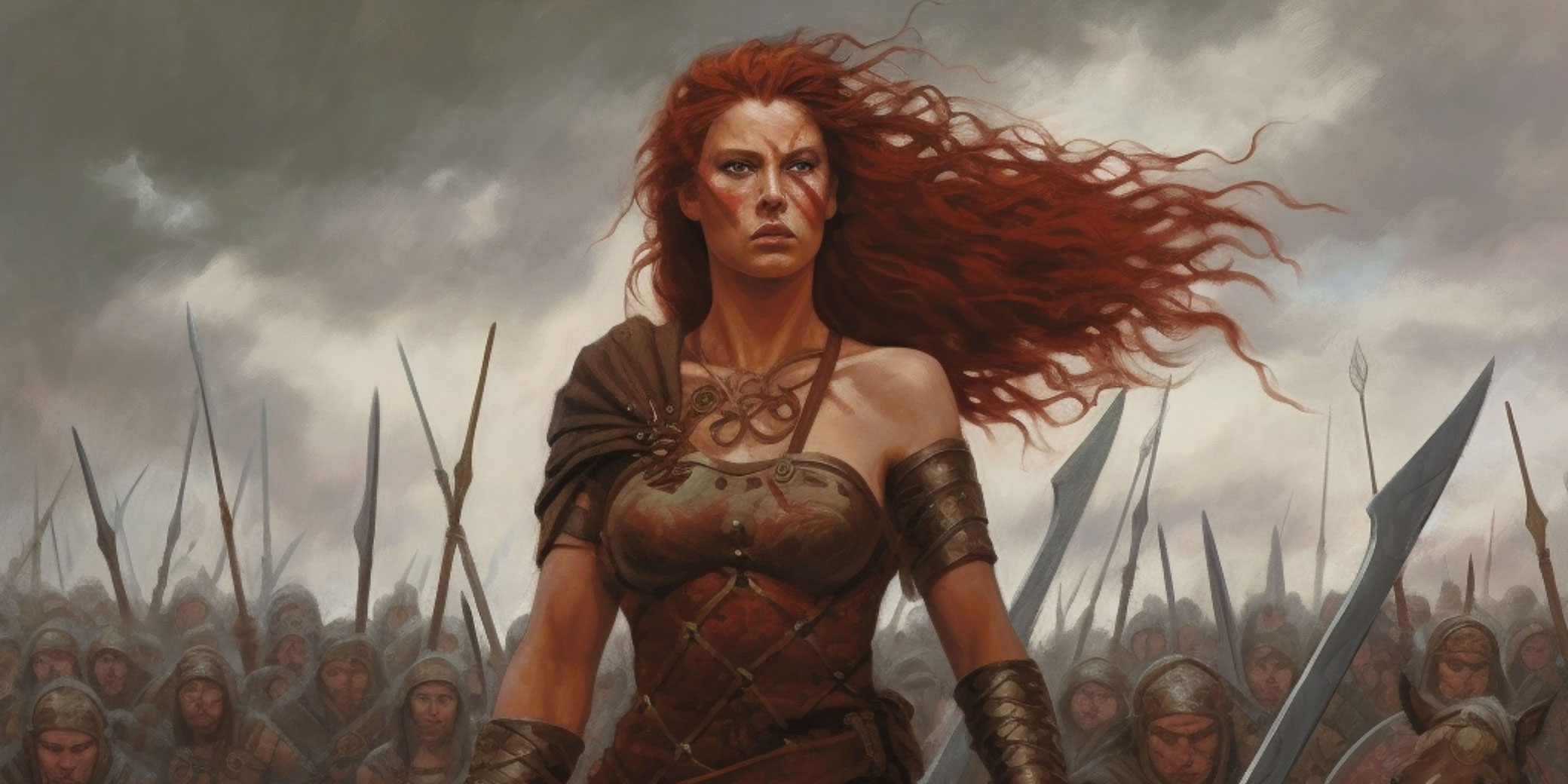
The harrowing reason that drove Boudica to rise up against the military  might of the Roman Empire - History Skills

Boudica, the queen of the British Iceni tribe, led an uprising against the occupying forces of the Roman Empire. After suffering personal tragedy at the hands of Roman officials, Boudica rallied her people and neighboring tribes to fight back. Her leadership and ferocity in battle, though ultimately unsuccessful, have made her a symbol of resistance and a powerful figure in British history.

Catherine the Great: Empress of Russia

Catherine The Great: True Story Of Her Rule, Husband, Affairs & Children |  HistoryExtra

Catherine the Great, born a German princess, rose to become the empress of Russia. Her reign was marked by significant reforms in education, agriculture, and the legal system. However, she was also known for her ruthless tactics in consolidating and maintaining her power, including the overthrow of her husband, Peter III. Catherine’s legacy is a testament to her ability to wield power effectively, albeit sometimes controversially.

Margaret Thatcher: The Iron Lady

Margaret Thatcher: Britain Awake "Iron Lady" - 1976 — Speakola

Margaret Thatcher, the first female Prime Minister of the United Kingdom, earned the nickname “The Iron Lady” for her uncompromising politics and leadership style. Her tenure saw significant economic and social reforms, and she played a pivotal role in international relations during her time in office. Thatcher’s policies and personality polarized opinion, but her impact on British and global politics is undeniable.

Indira Gandhi: The Only Woman Prime Minister of India

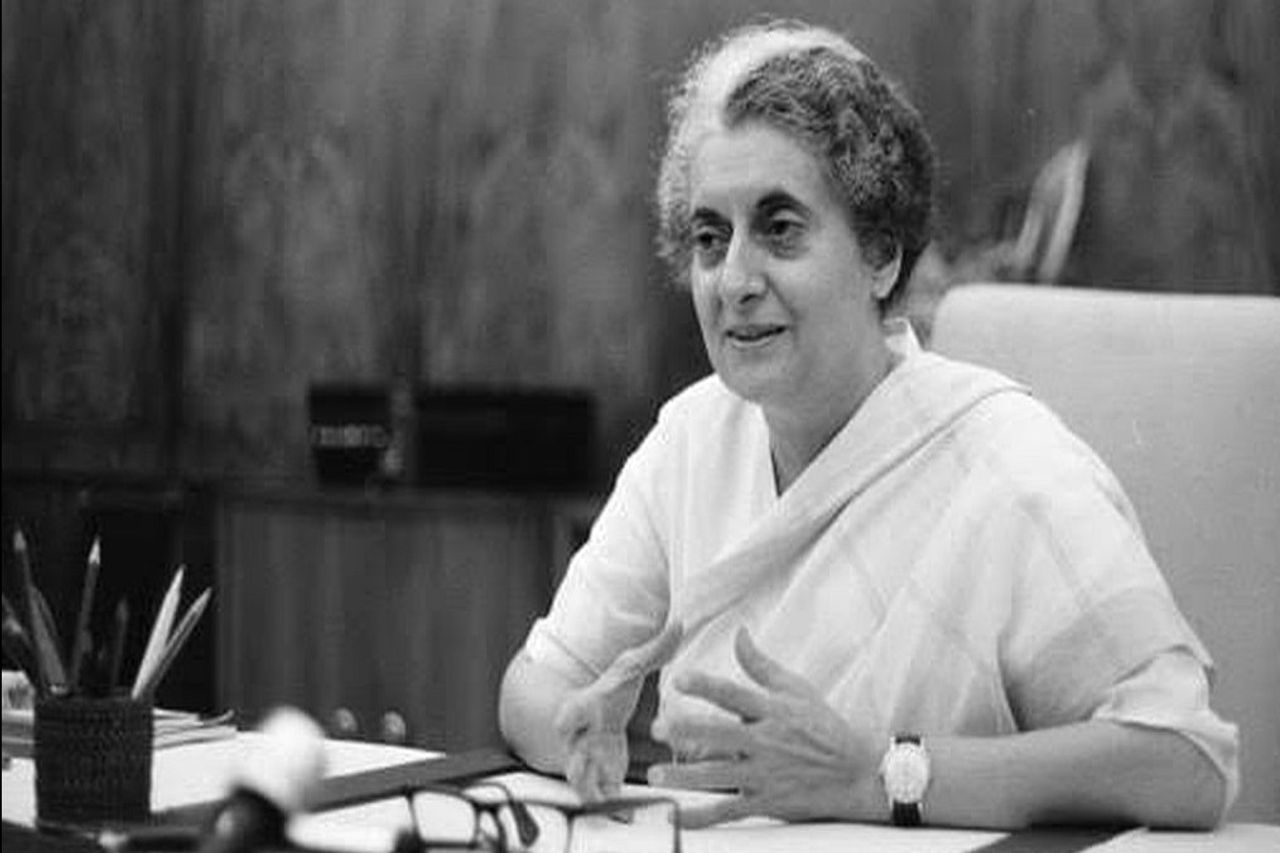
India's First Female Prime Minister Named Indira Gandhi

Indira Gandhi, the daughter of India’s first Prime Minister, Jawaharlal Nehru, became the only woman to serve as Prime Minister of India. Her leadership was marked by significant achievements, including the Green Revolution and India’s victory in the Bangladesh Liberation War. However, her tenure was also controversial, particularly during the Emergency period, showcasing her willingness to use authoritarian measures to maintain control.

Conclusion

The women known as “Venomous Vixens” are a diverse group, each with their own unique story of how they came to wield power. Their lives and legacies challenge the notion that power is the exclusive domain of men. While their methods and policies may be controversial, their achievements and the barriers they broke cannot be ignored. These women remind us that power, in whatever form it takes, requires intelligence, determination, and sometimes, a willingness to be ruthless. They are a testament to the complexity of power and the diverse ways in which it can be wielded.

Breaking Barriers: Female in Sports

The world of sports has long been dominated by men, but in recent decades, women have been breaking barriers, challenging stereotypes, and making significant strides in various athletic arenas. This evolution is not just about participation; it’s about excelling, leading, and transforming the landscape of sports globally. This article celebrates the incredible journey of women in sports, highlighting key milestones, inspirational figures, and the ongoing challenges they face.

Historical Milestones

The history of women in sports is marked by numerous groundbreaking moments. One of the earliest was in 1900, when women were allowed to compete in the Olympics for the first time. Only 22 women participated, but it was a significant step towards gender equality in sports.

In 1972, Title IX was enacted in the United States, prohibiting gender discrimination in any educational program receiving federal funding. This legislation had a profound impact on women’s sports, leading to a dramatic increase in female participation at the high school and collegiate levels.

Inspirational Figures

Throughout the years, many women have emerged as trailblazers in their respective sports. Billie Jean King, an iconic tennis player, not only excelled on the court but also fought tirelessly for gender equality. Her victory in the 1973 “Battle of the Sexes” match against Bobby Riggs was a pivotal moment in promoting the capabilities and competitiveness of female athletes.

In more recent times, Serena Williams has become a symbol of excellence and resilience in tennis. With 23 Grand Slam singles titles, she has shattered records and inspired millions of young girls worldwide to pursue their dreams, regardless of the obstacles.

In soccer, figures like Mia Hamm and Abby Wambach have not only dominated the field but have also become advocates for gender equality in sports. Their efforts have contributed to the growing popularity and support for women’s soccer globally.

Overcoming Challenges

Despite these successes, women in sports continue to face numerous challenges. Gender pay disparity remains a significant issue, with female athletes often earning considerably less than their male counterparts. For instance, the U.S. women’s soccer team, despite their consistent success, has had to fight legal battles to receive equal pay and conditions as the men’s team.

Media coverage also remains skewed, with women’s sports receiving significantly less attention than men’s sports. This lack of visibility affects sponsorship opportunities and public support, creating a cycle that is difficult to break.

Additionally, societal stereotypes and cultural barriers still hinder the full participation of women in sports in many parts of the world. In some cultures, women are discouraged or even prohibited from engaging in physical activities, limiting their opportunities to develop and showcase their talents.

The Path Forward

The future of women in sports looks promising, with increasing global awareness and support for gender equality. Organizations and movements such as #MeToo and Time’s Up have amplified the conversation around women’s rights, including in the sports arena.

Efforts to promote inclusivity and diversity in sports are also gaining traction. Initiatives like the International Olympic Committee’s Gender Equality Review Project aim to ensure equal opportunities and resources for female athletes.

Moreover, the rise of social media has provided a platform for female athletes to directly connect with fans, share their stories, and advocate for change. This has helped in building a supportive community and increasing the visibility of women’s sports.

Conclusion

The journey of women in sports is a testament to resilience, determination, and the relentless pursuit of equality. While significant progress has been made, the fight is far from over. It is crucial to continue supporting and encouraging female athletes, breaking down barriers, and creating an inclusive environment where everyone, regardless of gender, can thrive in sports. As we move forward, let us celebrate the achievements of women in sports and work collectively towards a future where gender equality is the norm, not the exception.